Key takeaways
- Two corridors carry most regional trade: Northern from Mombasa, Central from Dar es Salaam.
- Road dominates because rail capacity does not yet match the freight task.
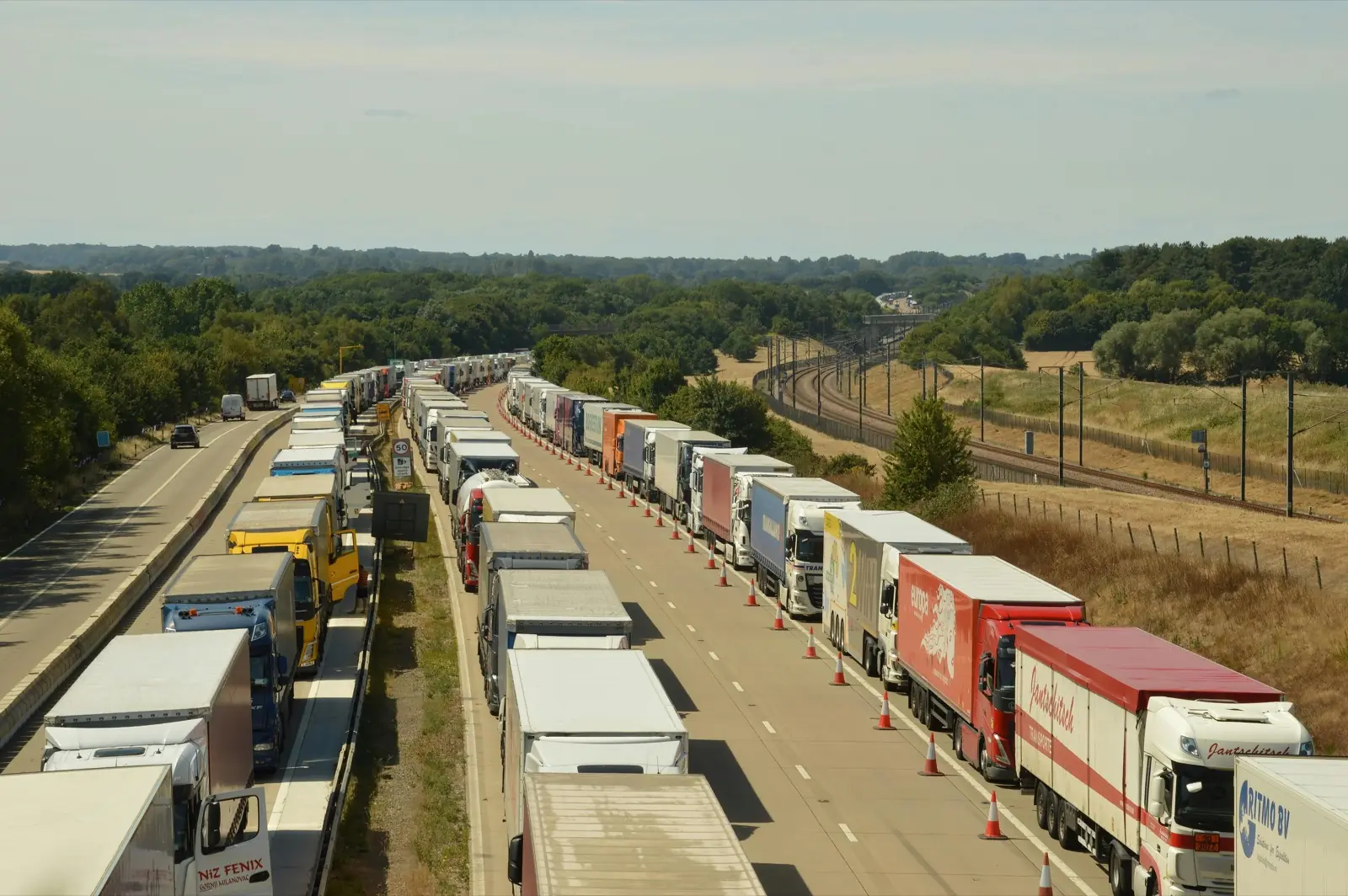
- Border and port dwell time, not driving time, dominate regional transit.
- Cold chain and last-mile capacity are the scarcest capabilities in the region.
If you are planning a supply chain that touches East Africa, the map is not the useful document. The useful document is the corridor map — because almost everything in this region moves along two of them, and how well your cargo moves depends far more on which corridor it uses than on the distance involved.
The two corridors that carry the region
The Northern Corridor begins at the Port of Mombasa and runs inland through Nairobi and Nakuru to the Ugandan border at Malaba and Busia, continuing to Kampala and on to Kigali. It serves Kenya, Uganda, Rwanda, eastern DRC and South Sudan. It is the busiest freight route in the region.
The Central Corridor begins at Dar es Salaam and runs inland through Tanzania, connecting to Rwanda, Burundi and western Tanzania, and linking to Kenyan traffic through Namanga, Holili and Isebania.
Below these, southern routes carry long-haul cargo into Zambia and Botswana through Tunduma and Kazungula.
For most shippers the practical question is not "which is better" but "which one does my cargo land on, and does my provider actually run it".
Why road still dominates
Rail investment in the region has been substantial, and standard gauge rail moves meaningful volumes inland from Mombasa. But rail serves fixed points; cargo has to reach a railhead and leave one, and the first and last legs are road regardless. For most consignments — particularly anything under a full train's worth, anything temperature-controlled, and anything with a delivery point that is not a major terminal — road remains the only complete answer.
This is why an owned road fleet remains the core asset in regional logistics, and why the vehicle mix matters. A provider with only prime movers cannot serve a retail network; a provider with only light trucks cannot serve a corridor.
Where the time really goes
A common planning mistake is estimating regional transit from driving distance. Nairobi to Kampala is a manageable drive. It is rarely the driving that decides the transit time.
The dominant variables are:
- Port dwell — how long a container waits at Mombasa or Dar es Salaam before it is released and collected.
- Border processing — documentation quality first, queue second.
- Weighbridges and checks along the corridor.
- Driving hours and rest requirements on long-haul routes.
- Delivery-point receiving windows — a truck that arrives outside a depot's window has not arrived.
Only one of those is distance. Any transit estimate that does not name its assumptions on the other four is optimism.
What is genuinely scarce
Two capabilities are consistently harder to buy in this region than general haulage:
Cold chain
Refrigerated capacity exists, but documented cold chain — pre-cooled loading, continuous temperature logging, recorded handover temperatures — is scarcer than the number of reefer trucks suggests. For dairy, meat, fresh produce and pharmaceuticals, the record is part of the product. Ask to see what a temperature record from a completed trip actually looks like.
Last-mile reach
Serving a Nairobi industrial area is straightforward. Serving a trading centre reached by an unsealed road, or a customer who is only available in the evening, requires a different vehicle mix — 4x4 pickups and motorbikes — and a willingness to run them. Many providers quote national coverage and then decline the awkward drops.
What this means for planning a regional supply chain
- Choose the corridor deliberately. Where your cargo lands should be a decision, not an inheritance from your supplier's habit.
- Treat documentation as an operations task. It is where recoverable time lives.
- Reduce handovers. Every change of provider is a point where accountability and information both degrade.
- Plan around receiving windows, not around departure convenience.
- Buy the vehicle mix you actually need, including for the awkward ten percent of drops.
None of this is exotic. It is simply the difference between a supply chain that is planned and one that is hoped for.

Written by the Jastan Logistics operations team. We move freight across Kenya, Uganda, Tanzania, Rwanda, Zambia and Botswana on our own fleet of 120+ vehicles. Everything here comes from work we do every week.